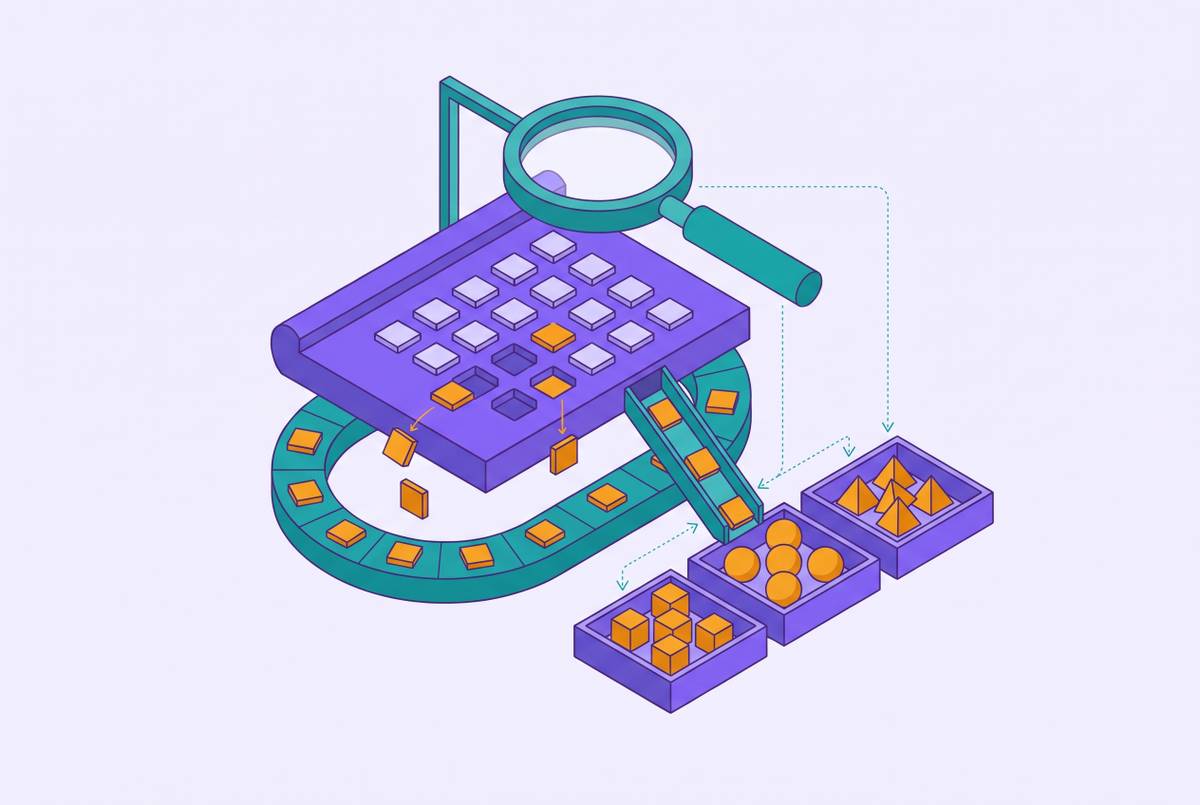
Persistent SAT Mistakes as Diagnostic Signals for Targeted Knowledge Mastery
Recurring errors reveal whether knowledge, execution, or question-reading breaks down.
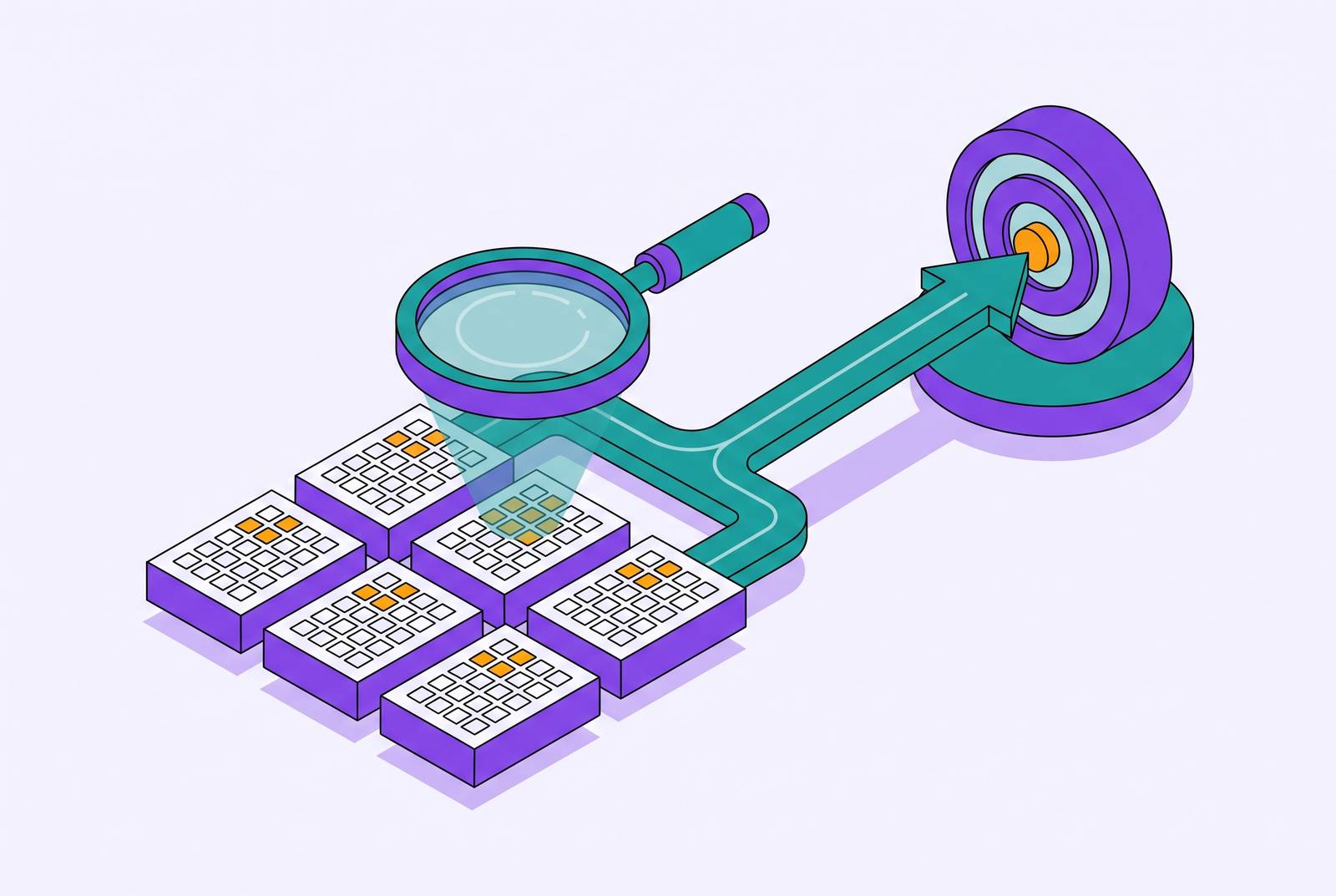
Persistent SAT mistakes reveal where understanding, execution, or question-reading breaks down. SAT prep with personalized knowledge mastery uses those repeated errors to find the cause, choose a way to fix it, and test whether the gap has closed.
Why practicing more without changing anything tends to stall scores
A student looks over a practice test and finds a red mark they have seen before. That question type appeared last week, and the week before. The explanation makes sense, yet the next attempt goes wrong in much the same way. Practice is happening, but progress seems to have skipped the party. The frustration is understandable because the student is doing the visible work without getting information that changes the next attempt.
A count of wrong answers cannot explain their cause. More attempts may simply rehearse a flawed approach, making it familiar while leaving it incorrect. That is why flat scores can be a predictable result of treating practice as volume alone. Once an error recurs across sessions, it gives the student a pattern to investigate.
What "persistent" means and how to distinguish it from ordinary wrong answers
A persistent mistake recurs across different surface forms of the same underlying concept. The numbers, wording, or context change, but the breakdown remains. One wrong answer on a hard question may reflect unfamiliarity, fatigue, or carelessness. Recurrence across varied practice sets makes those surface explanations less convincing.
Two questions give the student a practical test. Does the error occur in both timed and untimed work? Does it appear in unfamiliar formats as well as familiar ones? Affirmative answers to both point toward a root-cause gap rather than a problem tied only to the testing situation. An error that disappears without time pressure needs a different interpretation from one that survives a calm, unhurried attempt.
Confidence makes this distinction sharper still. A student who repeatedly misses questions they believe they understand has a mismatch between their mental model and their performance. That mismatch is useful evidence. Feeling certain does not prove that the reasoning is sound. Sometimes it means the wrong rule has settled in comfortably.
The three root-cause categories that explain most persistent SAT errors
A conceptual gap means the underlying idea is incomplete or incorrect. In Math, that might mean treating linear and exponential growth as interchangeable or misunderstanding what a function’s domain restriction constrains. In Reading and Writing, it might mean lacking a stable understanding of “main purpose” or confusing correlation with causation. The student can perform a procedure when told which one to use but cannot identify the applicable concept independently. Conceptual instruction and worked examples address that instability.
A procedural flaw means the student understands the idea but executes the steps incorrectly or incompletely. They may know that isolating a variable is the goal while repeatedly making a sign error when moving terms across the equals sign. In a passage question, they may understand that evidence must support a claim but skip checking whether the cited lines actually do so. Simple versions often go well. More complex versions expose the weakness because the procedure breaks under load.
A strategic misread occurs when the concept and procedure are intact but the student answers a different question from the one asked. The work may give the right result along the way, but the chosen answer is wrong because the question needed one more step. Errors often cluster around multi-step or subtly worded questions. A single student can have errors in all three categories, so the task is to diagnose each recurring pattern.
How do you find out which SAT concepts are hurting your score?
An error log becomes diagnostic when it records reasoning alongside results. To build one, group wrong answers by question type and skill tag, then look for recurrence. Frequency shows which areas deserve closer attention, but it does not establish the cause. For each recurring type, reconstruct the work aloud or in writing without time pressure. Record the skill area, stated reasoning, confidence, and likely error category.
Consider a recurring error in linear equations. If the student cannot explain how to begin, the investigation points toward a conceptual gap. If they explain the goal correctly but repeatedly lose a sign during the manipulation, a procedural flaw is the stronger diagnosis. If they solve for a variable correctly but the question asks for a further result, the breakdown is a strategic misread. The topic label stayed the same throughout. The reasoning chain supplied the distinction that the wrong answer alone could not.
Confidence helps interpret that chain. A student who was certain of a mistaken concept needs more than a reminder that the answer was incorrect, because the faulty model itself feels reliable. A student who flagged uncertainty has already noticed that something is missing. At either confidence level, the work still needs to be checked. It tells the student or tutor how firmly the mistaken reasoning may be established.
Why the category of error must determine the remedy, not just the topic area
“I miss systems of equations” identifies a location. A student with a conceptual gap who does fifty more systems-of-equations problems is still working from an unstable model. By contrast, a student with a procedural flaw may reread explanations of an idea they already understand while leaving the faulty steps untouched. Both remedies look relevant because they concern the right topic. Neither necessarily reaches the breakdown.
The corrective principle is to match the intervention to the cause. For conceptual gaps, the student needs teaching and worked examples that make the idea clear. Procedural flaws call for reconstructing the process with deliberate error-catching. Strategic misreads call for attention to what the question requests, rather than more explanation of a concept the student can already use.
Does diagnosis slow everything down? It can feel slower than turning straight to another page of questions. But unmatched remediation consumes whole sessions without closing the gap, which makes its apparent speed misleading. The comparison is between practice that changes the next attempt and practice that repeats the last one.
How the diagnostic loop works as an ongoing practice structure, not a one-time audit
The diagnostic loop has four stages, which are practice, diagnosis, matched remediation, and re-testing. Each round gives the student something to use in the next, along with a score to keep on file. Practice exposes a recurring breakdown, diagnosis assigns a cause, and remediation addresses it. Re-testing then asks whether the repair worked. Without that last stage, the student has evidence of studying while mastery remains unverified.
If the error appeared across different phrasings and contexts, success on one familiar question does not establish that it has disappeared. The useful test is whether the student can handle varied forms of the underlying skill without repeating the breakdown. An explanation can feel clear while doing the thinking for the reader. A fresh attempt removes that support.
Once a gap closes, it should leave the active error log. Otherwise, comfortable practice crowds out unresolved work. New persistent errors may then become visible because an earlier, more fundamental gap had masked them. That is a sharper diagnosis. Each pass refines the picture, which makes the loop useful even when available study time is limited.
Where AI-powered feedback accelerates the diagnostic loop — and where human judgment still matters
Manual error logging creates a bookkeeping burden. Keeping track of a dozen skill areas across practice sets can take so long that students fall back on lists of just right and wrong answers. AI feedback can help find patterns across many attempts faster than a student can track them by hand. But speed alone does not make feedback diagnostic.
For a student comparing SAT tutoring or AI tools, the useful criteria follow from the method. Does the feedback identify the skill involved, explain where the reasoning broke, and help distinguish a conceptual gap from a procedural flaw or strategic misread? Does the resulting practice address that cause and allow a re-test? Those functions are more informative than a larger question supply by itself. Automated feedback varies in detail, so the presence of AI does not establish that a tool can make these distinctions.
A system seeing only the chosen answer cannot distinguish an overconfident conceptual error from a calculated guess that failed. Students who annotate their reasoning and confidence before submitting give the tool better inputs. They also have to engage with the explanation and ask whether it describes the reasoning they actually used. The verdict is not a substitute for that comparison.
Applying the diagnostic approach across the two main SAT domains
In Math, procedural flaws are the most common persistent-error source, while conceptual gaps are also significant. Work with several steps can show where a student makes a wrong move even when they understand the goal. Still, a long calculation does not prove that execution is the problem. The diagnostic move is to test the concept in isolation first, using a single-step question without pressure. If the isolated concept also fails, procedural practice would begin too far downstream.
In Reading and Writing, strategic misreads are disproportionately common, so diagnosis starts closer to the wording of the task. The student can restate the question in their own words before looking at the choices. An incorrect restatement points toward a misread. A correct restatement followed by a wrong answer shifts attention toward interpretation, including the student’s understanding of evidence or argument. The distinction is between misunderstanding the assignment and misunderstanding the material used to answer it.
In Math, diagnosis often needs to separate what the student understands from how they carry out the steps, while in Reading and Writing it often needs to separate what the question asks from what the passage says. Neither domain gets an exclusive error category. A skipped evidence check can still be procedural, and a correctly solved Math subproblem can still end in a strategic misread.
Turning a persistent-error audit into a study plan with a clear endpoint
To turn the method into a plan, start with one full-length practice test and log every wrong answer with its skill tag, reasoning, and confidence. This creates a baseline. Compare those misses with recurring errors in other practice, using the timed and untimed and familiar and unfamiliar filters. Then assign causes to the patterns that hold up. The audit should produce specific gaps rather than broad declarations such as “bad at algebra.”
Those gaps do not all deserve equal time. How often the errors recur helps show which gaps to work on first, while the reasoning shows how to fix each one. Each active entry needs a matched intervention and a criterion for closure through re-testing. This gives the study plan a finite set of tasks. It also gives the student a reason to stop working on a repaired weakness.
The plan’s working endpoint is an empty active gap list. The score remains the desired outcome, but the list directs attention toward work the student can control. As gaps close, their entries come off the list, and any recurring errors now visible in practice go into the next loop. The first concrete task is therefore the audit and its resulting gap list, with each entry naming the skill, the breakdown, the matched remedy, and the evidence needed to close it.
Sources
- Fix the Mind, Not the Move: Interpretable AI Assistance via Knowledge-Gap Localization
- GPT takes the SAT: Tracing changes in Test Difficulty and Math Performance of Students
- Tailoring Diagnostic Modeling to Individual Learners: Personalized Distractor Generation via MCTS-Guided Reasoning Reconstruction
- From SQL Errors to Concept Gaps: An AI-Powered Knowledge Graph Analytics Platform for Diagnostic Feedback © 2026 IEEE. Personal use of this material is permitted. Permission from IEEE must be obtained for all other uses, in any current or future media, including reprinting/republishing this material for advertising or promotional purposes, creating new collective works, for resale or redistribution to servers or lists, or reuse of any copyrighted component of this work in other works.
- The Correct Answer Trap: Pedagogically-Grounded Detection and Feedback for Hidden Misconceptions
- The Correct Answer Trap: Pedagogically-Grounded Detection and Feedback for Hidden Misconceptions