Self-Explanation as a Feedback Strategy in SAT Math
Explaining your reasoning mid-problem catches gaps that answer keys never reveal.
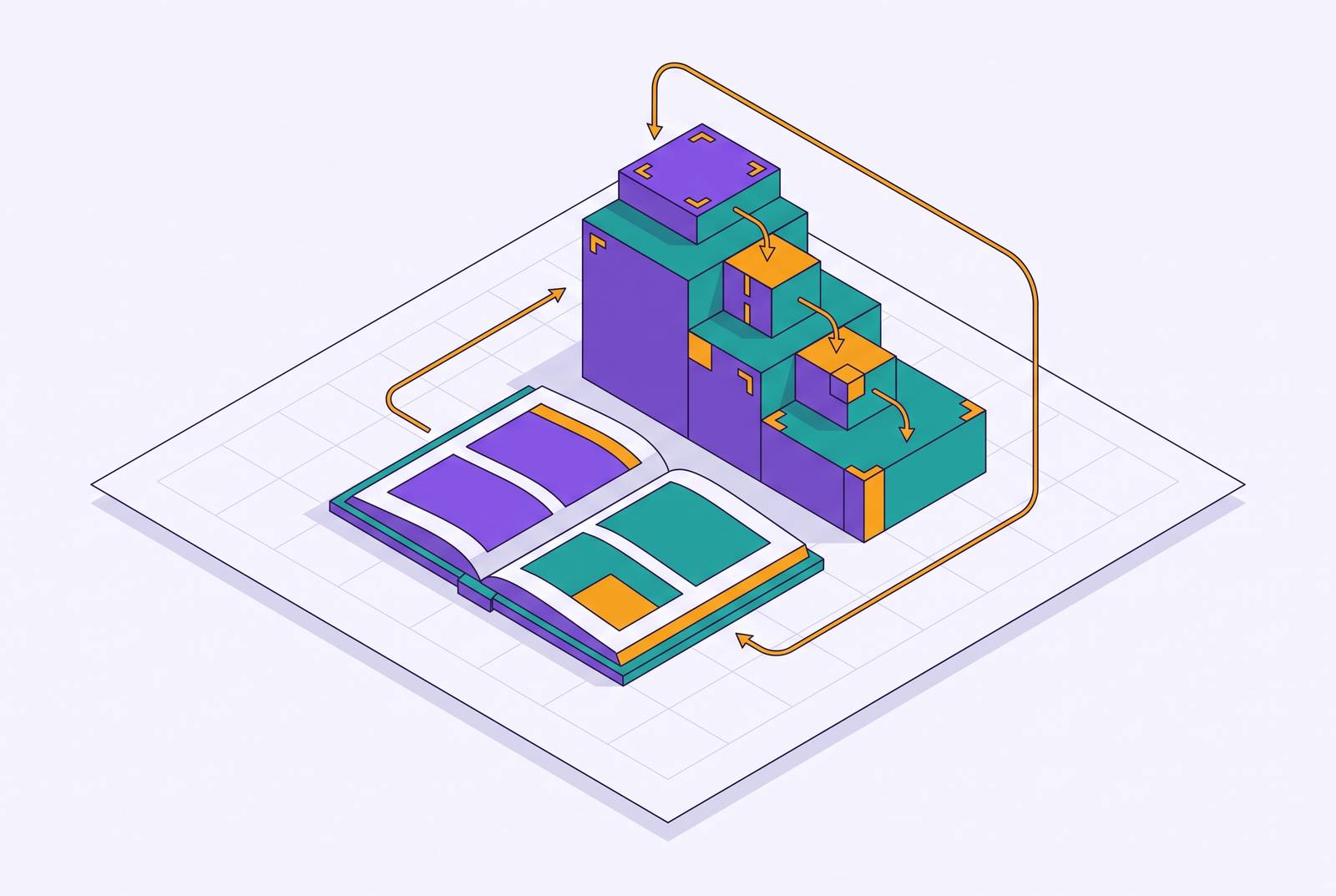
Self-explanation is the act of stopping mid-problem to explain, in your own words, why a step works. Not what the step is. Why it works. Research on math learning suggests this small habit does something answer-checking can't: it drags a student's actual reasoning out into the open, where it can be examined, corrected, and reused on the next hard problem. This article walks through what the research shows, why SAT Math is an unusually good testing ground for it, and what it looks like when a student actually does it.
Start with a definition, because the term gets used loosely. Self-explanation has been described as generating explanations to yourself in an attempt to make sense of new information. That's it. It's not summarizing a solution. It's not re-reading your work to see if it "looks right." Both of those are passive. Self-explanation is you, the student, both producing the reasoning and being the one who benefits from hearing it.
That distinction matters because self-explanation asks a learner to generate new inferences and stitch new information into what they already know, rather than simply re-encountering material or manipulating it slightly. That's a categorically different kind of mental work.
Two mechanisms seem to drive the effect:
Knowledge integration: linking a new idea to something already sitting in memory. Mental model revision: catching a flawed internal rule and rebuilding it.
Why does this matter specifically for SAT Math? Because multiple-choice scoring can only tell a student one thing: right or wrong. It says nothing about the reasoning that got them there. Self-explanation targets exactly the part the score report leaves blank.
Self-explanation comes in open-ended and menu-based flavors, a distinction worth knowing lightly. Open-ended means the student explains freely, in their own words. Menu-based means picking from a preset list of explanations, which is easier but has a lower ceiling. The reasoning behind open-ended is that it lets a student build their own connections instead of recognizing someone else's, though the comparative long-term evidence is limited.
What the research actually shows about self-explanation's effect on math learning
Start with the numbers, because they're specific and worth sitting with. Rittle-Johnson et al. (2017) found that prompted self-explanation produced effect sizes of 0.28 for procedural knowledge, 0.33 for conceptual knowledge, and 0.46 for procedural transfer, all measured right after the intervention.
Notice which number is biggest. Transfer, not recall. That's the finding that matters. Self-explanation doesn't just help students remember a procedure. It helps them apply that procedure somewhere new, which is a much harder and much more valuable skill.
But don't stop there, because the full picture has real caveats.
A 2011 meta-analysis by Durkin, presented through the Society for Research on Educational Effectiveness, found the evidence for self-explanation holding up in ordinary classroom settings, or over a delay, is a lot thinner. The effect is real. It's just fragile once you take it out of a controlled study and put it into a normal week of practice.
There's also a time-cost problem. Self-explanation takes longer than just grinding through problems. In some studies, when the comparison group used that same time to do more problems instead, the self-explanation advantage vanished. Those particular studies used unprompted verbal explanations without structured quality checks. Nobody checked whether the explanations were any good.
And prior knowledge matters. Research suggests the benefit of self-explanation shows up specifically on topics where students are still building knowledge, not ones they've already mastered. If self-explanation only pays off where there's a gap to fill, is it a strategy you use on every problem, or a scalpel you use on the ones giving you trouble?
The research points toward the scalpel. Blanket self-explanation of every SAT Math problem probably isn't worth the time. It earns its keep on the algebra, advanced math, geometry, or data analysis problems a student has already flagged as weak spots.
That leaves one open question: what determines whether self-explanation delivers that 0.46 transfer effect, or quietly wastes an hour? The answer, it turns out, is scaffolding and feedback quality, which is where this gets interesting.
Why SAT Math is precisely the domain where this strategy matters most
SAT Math makes up half the total SAT score. Half. A small shift in accuracy can be the gap between a 1450 and a 1500-plus, according to Cuemath, which makes any strategy that improves reasoning quality, even marginally, worth taking seriously.
The current version of the test, the digital SAT rolled out in 2024, runs through the College Board's Bluebook app on a laptop, iPad, or school-managed Chromebook. Everything discussed here applies to that format.
The math section covers four areas: algebra, advanced math, problem solving and data analysis, and geometry. Each demands a different kind of reasoning. A student can be sharp in algebra and stuck in geometry at the same time, which is exactly why generic, one-size-fits-all practice runs into a ceiling. Per Northside Tutoring, static practice tests and generic advice can't adapt to a student's specific gaps, learning style, or how they perform under pressure. That's the plateau a lot of students hit around month two of prep.
Here's the part multiple-choice scoring can't see:
- A wrong answer and a right answer reached by broken logic look exactly the same on a score report.
- A student who eliminates down to the correct choice without understanding why has learned nothing they can reuse.
- Self-explanation is the mechanism that forces that hidden reasoning into view, where it can actually be fixed.
Hard SAT problems are, structurally, transfer problems. They take familiar content and dress it up in an unfamiliar setup. That's precisely the condition under which self-explanation showed its largest effect (0.46, for transfer). The strategy and the problem type were built for each other, whether or not the test writers meant it that way.
So if self-explanation surfaces the gaps in a student's reasoning, the next question is: what do those gaps actually look like in practice?
How self-explanation exposes gaps that answer-checking never reaches
When a student tries to explain a step and can't, that's the gap. Not the wrong answer at the bottom of the page. The moment mid-explanation where the words run out.
Research on self-explanation describes it as promoting knowledge elaboration and monitoring, which contributes to revising how knowledge sits in memory. In plain terms: the student isn't just finding the mistake, they're rebuilding the faulty model that produced it in the first place.
Four things self-explanation tends to surface in math specifically:
Gap-filling: noticing, mid-sentence, that a piece of the logic is missing. Mental model revision: catching and correcting a flawed procedure. Conflict detection. Noticing that two things you believe can't both be true at once (applying a rule that quietly contradicts a definition you also hold). Error detection and self-correction: catching the mistake before ever checking the answer key.
Picture two students solving a system of equations. Both get the right answer. One used substitution, the other elimination. Ask the first student why they picked substitution over elimination, and if they can't say, that's not a procedural gap. They know how to execute the steps. They don't know why this problem called for that particular tool. That's a principle-level gap, and it's invisible until someone asks the question.
Or take a student who misapplies an exponent rule. If they check the answer key, they see a red X and move on. If they self-explain the step instead, the misconception itself becomes visible: maybe they're treating multiplication and addition of exponents as interchangeable. One method shows the symptom. The other shows the disease.
A 2023 paper in Sustainability describing a system called SEAF formalizes this same idea in software: it includes a missing knowledge detection module designed to flag exactly what's absent from a student's written explanation. It's the same gap-detection loop, just automated.
Which raises the obvious follow-up: none of this works if nobody checks the explanation. A gap that surfaces but never gets evaluated just sits there. That's where open-ended self-explanation, on its own, starts to fall short.
Why open-ended self-explanation needs feedback to deliver its full benefit
Open-ended self-explanation is designed to push deeper reasoning than menu-based approaches. But open-ended also means wildly inconsistent quality. Some students write sharp, precise explanations. Others write something technically true but shallow. Without anyone checking, a student can spend twenty minutes practicing a bad explanation and walk away having reinforced the exact misconception they should have fixed.
The meta-analytic evidence backs this up: the effect on immediate learning outcomes was stronger specifically when the explanations were scaffolded for quality. Scaffolding isn't a nice extra. It's the variable that makes the whole strategy reliable instead of a coin flip.
So why doesn't this happen more? Mostly because grading written explanations is slow. Evaluating student-written explanations costs instructors real time, both to grade and to write corrective feedback. The practical result: these kinds of open-ended questions rarely get assigned, and when they do show up, the feedback loop often just doesn't close. Students explain, nobody checks, and any misconception baked into that explanation quietly survives.
A study from one research university (Chen, Tang, Zhao, and colleagues, 2026, 92 students, one fixed 60-minute session) tested what happens when that gap gets filled with feedback generated by one model instead of nothing. The results are worth sitting with:
- Students who self-explained openly, with LLM feedback on their explanations, produced significantly better explanations than students in a no-self-explanation control, specifically on "Not Enough Information" transfer problems (a jump of 11.9 percentage points, statistically significant at p =.030).
- This held even though the self-explanation group solved fewer total problems in the same 60 minutes.
- The menu-based condition, without open explanation or AI feedback, didn't show that same transfer advantage.
Why does the "Not Enough Information" problem type matter here? Because it's structurally the same animal as the SAT's hardest math questions, the ones that hand you an ambiguous or incomplete setup and force you to reason about what's missing. Those are exactly the questions that separate a good score from a great one.
The takeaway isn't just "explain your work." It's that the feedback on the explanation carries as much weight as the explaining itself, and that feedback needs to be fast, specific, and tied to the actual reasoning, not just a thumbs up or down on the final number.
What AI grading of written explanations can and cannot do reliably
Can a machine actually grade an explanation well enough to matter? The evidence says yes, with real limits attached.
A 2511.10819 arXiv paper found GPT-4o reaching correlation as high as 0.98 with human graders, and landing on the exact same score as a human grader in 55% of quiz cases. That's the threshold that turns AI feedback from a novelty into something a student can actually learn from.
Beyond a single score, well-designed AI feedback can deliver a substantive account of what a student missed and why, instantly, at any hour, as many times as needed.
Math grading specifically needs its own structure to work well. Researchers have noted that grading rubrics work better when they break a solution into small, explicitly listed steps. That structure matters because it stops one shaky judgment call from swinging the whole score.
There's real-world data behind this too. Emerging research suggests AI-assisted grading can approximate what an instructor would do in a small class, pointing toward a measured rather than merely theoretical benefit.
The honest limit: when a problem has multiple valid solution paths, which is common in SAT Math, models show some inconsistency. A student who solves a problem correctly but unconventionally is exactly the case where AI grading gets shakier.
Put together, AI grading closes the loop that unscaffolded self-explanation leaves open, and it does it at a speed no human tutor can match one-on-one. But the value of that feedback rides entirely on how carefully the rubric and step breakdown were built. Sloppy rubric, sloppy feedback, no matter how fast it arrives.
What self-explanation looks like in a structured SAT Math practice session
Strip away the research and here's the actual sequence a student would run through:
- Attempt the problem without racing straight to a memorized strategy.
- Write out the reasoning, in plain language, behind each step, after solving or attempting it. Not "I used the quadratic formula." Instead: why that approach fit this problem, what in the problem's structure signaled it, and what would have gone wrong with a different approach.
- Compare that explanation against a model answer, or get feedback on it. The gap between what the student wrote and what the model answer says is the actual diagnostic signal, more useful than the right/wrong marker ever was.
- Revise the understanding, not just the answer. The point isn't fixing this one problem. It's updating the mental model so the next unfamiliar problem benefits too.
Which problems deserve this treatment? Given what the research says about prior knowledge, the answer isn't "all of them." Self-explanation earns its time on problems in a student's identified weak spots, not spread evenly across a whole practice set.
There's also a maturity curve to how it's applied. Students with weaker foundations often do better starting with menu-based prompts, guided options that reduce the mental load while the habit of explaining takes root. As confidence builds, shifting to open-ended explanation with feedback is where the stronger, longer-lasting gains show up.
On the time-cost question: the research showed students doing fewer problems, but doing them with real explanation and feedback, still came out ahead on transfer quality. For a student who's plateaued on sheer volume of practice problems, that trade is worth making.
This differs from simply reviewing missed problems in that reviewing a solution tells you what the right answer was. Self-explaining, before and after that review, forces you to say out loud why your reasoning went somewhere else. The correction happens in the act of putting it into words, not in reading someone else's answer.
Passionfruit builds AI-powered grading and feedback into SAT Math practice across all four content areas, aimed at surfacing what a student actually understands rather than just what they got right. That's the same feedback loop described throughout this article, just built into the practice itself instead of left to chance.
Where self-explanation has real limits in SAT Math practice
None of this makes self-explanation a cure-all, and it's worth being upfront about where it comes up short.
Retention is the weakest link in the chain. The 2017 meta-analysis found limited evidence that self-explanation reliably holds up when students are tested after a delay. The immediate boost is real. The transfer boost is real. Whether it's still there a month later is a much shakier claim.
Self-explanation also can't substitute for knowledge a student simply doesn't have yet. The research suggests it works best while specific knowledge is still under construction, not as a way to build a topic from zero. A student with no schema for, say, circle geometry can't self-explain their way into one. Direct instruction or a concept review has to come first.
Quality without feedback is a coin flip, worth repeating one more time because it's the crux of the whole argument. An open-ended explanation with nobody checking it can just as easily cement a wrong idea as fix one. The feedback step isn't a bonus feature. It's the mechanism that makes the whole thing work.
And there's a practical volume problem. Timed practice, meant to simulate real test conditions, doesn't leave room to stop and self-explain every question. This strategy fits untimed practice best, aimed specifically at problem types that have been quietly costing points.
Self-explanation is a targeted tool, not a full prep plan on its own. Its real job is converting raw practice volume into understanding a student can actually carry into an unfamiliar problem, especially in the exact spots where their mental model is still being built.
Sources
- ERIC - ED518041 - The Self-Explanation Effect when Learning Mathematics: A Meta-Analysis, Society for Research on Educational Effectiveness, 2011
- Practice Less, Explain More: LLM-Supported Self-Explanation Improves Explanation Quality on Transfer Problems in Calculus
- ERIC - EJ1149060 - Promoting Self-Explanation to Improve Mathematics Learning: A Meta-Analysis and Instructional Design Principles, ZDM: The International Journal on Mathematics Education, 2017-Aug
- arxiv.org
- link.springer.com