Diagnosing the Cognitive Error Type Behind Recurring AP Free-Response Point Loss
Different error types demand different fixes, so diagnose where each lost point belongs.

Recurring AP free-response point loss becomes fixable when students diagnose the thinking behind each missed rubric criterion. The useful categories are knowledge gaps, misconceptions, application failures, and procedural slips, and each calls for a different remedy.
Why AP free-response scoring feels random even when students study hard
You recognize the terms, finish the practice, and still lose points on the next free-response question. What happened between studying and scoring? An AP Psychology student can ace a vocabulary quiz yet fall short on an FRQ because recognizing a definition is not the same as applying it to a scenario. The rubric scores the response you produce.
More practice seems like the obvious answer. But repeating a faulty explanation under timed conditions can reinforce the error. A student who calls every mistake “careless” may keep drilling when the real trouble is a faulty mental model. Start with a taxonomy of errors, then find where each lost point belongs.
The four cognitive error types that drive FRQ point loss
A knowledge gap means a needed term, definition, or formula is missing from memory. The response may be blank, vague, or padded with a related word. There is no usable concept to retrieve. A misconception, by contrast, means the student has a model, but the model is wrong. GradGPT’s AP Psych breakdown identifies confusing negative reinforcement with punishment as a damaging example, where fluent writing can hide a basic conceptual mix-up.
An application failure occurs when the student knows the concept but does not use it as the prompt requires. One subtype is task-verb misreading, such as naming a concept when asked to explain how or why it works. The AP Psych FRQ guide distinguishes “identify” from “explain” explicitly. The verb is not decorative trim on the question.
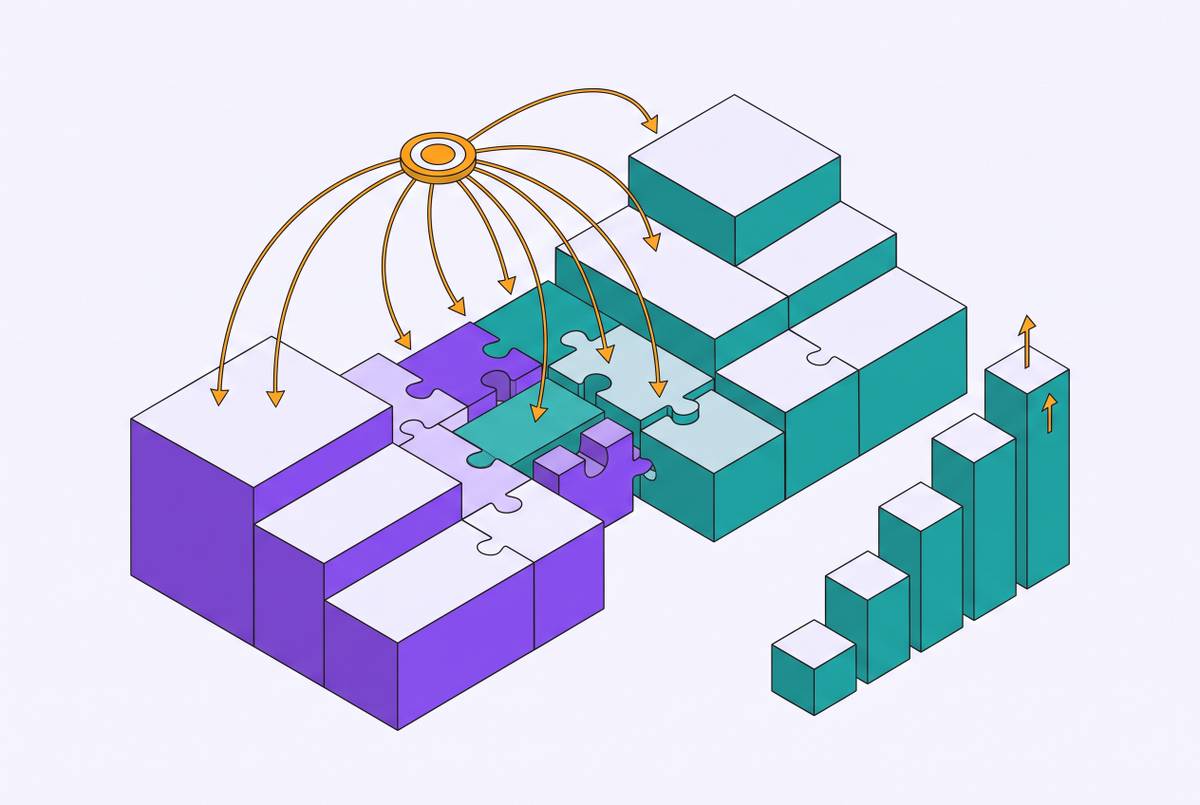
A procedural slip happens when the knowledge and reasoning are right but something goes wrong in carrying out the work, such as a transcription error, a wrong unit, or a final step left unfinished. Think of the four categories as missing knowledge, wrong knowledge, misapplied knowledge, and mishandled execution. That distinction determines the repair. Drilling a final-step check can address a slip, but it cannot replace a faulty understanding of reinforcement.
How can you tell exactly why an AP student keeps losing FRQ points?
Start with three questions about the response. First, did you write anything substantive? A blank or vague answer may be a sign of a knowledge gap, though more is needed to tell for sure. Second, was the answer confident and complete but wrong? That suggests a misconception, because the student had an explanation ready and trusted it.
Third, did you know the concept but lose the point anyway? If a comparison, scenario application, or justification was required and you supplied only a definition or calculation, suspect an application failure. If the reasoning was correct but you mis-transcribed or used the wrong unit, suspect a procedural slip.
Self-contradiction deserves a separate look. AP Psychology 2025 scoring guidelines state that incorrect information is not penalized unless it directly contradicts correct information that would otherwise earn the point. Defining the same concept in incompatible ways therefore signals a misconception. The hardest pair to separate is application failure and knowledge gap, because a student may “blank” when the concept is available but the required move is not. Ask whether you lacked the idea itself or did not know how to compare, explain, or apply it.
Application failures in STEM FRQs: when knowing the physics is not enough
GradGPT’s AP Physics 1 breakdown shows that students lose points for missing forces, unlabeled vectors, and free-body diagrams drawn on the object instead of as a point particle, even when the math that follows is right. These lost representation points offer a useful diagnostic clue for students who assume a correct numerical answer proves that the whole response worked.
The same breakdown shows that students can also lose points when they fail to give a paragraph-length justification. A coherent, multi-sentence physics argument using specific terminology is not interchangeable with a single sentence, bullet points, or math alone. Likewise, skipping straight to numbers can lose a justification point when the rubric calls for naming the governing principle, such as conservation of energy, Newton’s second law, or kinematics. The numbers are not their own legal counsel.
Question 1, Part B(i) of the 2025 AP Chemistry exam asked students to compare ion charges, so giving one ion’s charge covered only half the task. Restating information from the prompt likewise falls short of explaining it. Reporting pOH without converting to pH exposes a subtler boundary, because the student may have forgotten the final step or misunderstood the requested endpoint. For students with these patterns, the useful audit concerns the required diagram, principle, causal chain, or comparison.
Application failures and misconceptions in humanities FRQs: when knowing the civics is not enough
GradGPT’s AP Gov breakdown documents how an Argument Essay thesis, which requires a defensible position, can lose its point by hedging or summarizing. Knowing the civics does not supply the argument automatically. Naming a foundational document also differs from using a specific idea from it to support a claim. A document name is not an argument wearing a badge.
The same breakdown identifies counterclaim engagement as the most commonly dropped Argument Essay point. An opposing view still needs an answer after it has been mentioned. Likewise, a SCOTUS Comparison response leaves out the legal reasoning when it names the case but says only how the cases look alike on the surface. These are application failures because the student has relevant material but has not performed the scored intellectual move.
AP Psychology adds closely neighboring concepts to the trap. The Psych breakdown shows that students lose points when they mix up negative reinforcement and punishment, or short-term memory and working memory. By contrast, using the right concept for the wrong scenario element, or failing to name the relevant person, behavior, and trigger, points toward application failure.
The FRQ guide documents that the 2025 AP Psychology exam replaced Concept Application and Research Design questions with an Article Analysis Question and an Evidence-Based Question. Older-format preparation can therefore train students for the wrong demands. When analyzing an article, students can lose rubric-row points if they leave out operationalization, fail to name the independent and dependent variable, or leave out details of the sample, even when they understand research methods. Here, the diagnosis has to include whether the student practiced the required format.
Why misconceptions are harder to fix than knowledge gaps, and how to tell them apart
A knowledge gap leaves a space that needs to be filled. A misconception puts something wrong in that space and treats the job as finished. That is why rereading a correct definition may help the student who cannot recall it but fail the student who confidently confuses two concepts. Students can take in new information and still keep the faulty model.
A fluent wrong answer warrants probing into the assumption that made it seem right. Structural blindness complicates the picture when a student can follow a procedure but cannot explain why it fits the task. The student may then struggle when the prompt changes, even though the familiar procedure is still easy to follow.
The practical test comes after reviewing the correct answer. Can you explain, in your own words, why your original answer was wrong? Repair requires producing the correct model, explaining why the incorrect model fails, and applying the corrected model to a new scenario. Knowing what you do not know is useful, but locating where apparently sound thinking goes wrong is the harder diagnostic work.
Building a personal error log from returned FRQs
To make that distinction useful over time, keep an error log organized by lost rubric points. For each missed point, record the question, the rubric criterion, and the error type. Give the concept its own column. Give the missed structural demand another, including a diagram, named principle, comparison, counterclaim engagement, or scenario application when relevant. For an application failure, write down the subtype as well as the broad label.
A run of missing terms points toward targeted content work, while repeated definition-only answers to explanation prompts point toward task-verb practice. Confident but conceptually wrong responses call for model confrontation. Errors in units or final steps suggest a need to build a habit of checking the work before turning to re-teaching.
Keep the log across multiple practice sets. A single FRQ is not a pattern, but three to five in the same subject begin to reveal one. Mixed patterns are useful too, because a student may have knowledge gaps in AP Chemistry and application failures in AP Psychology. The log prevents one convenient remedy from being prescribed for two different problems.
How AI-powered feedback accelerates error-type diagnosis
AI grading and feedback tools can shorten the diagnostic cycle by returning rubric-criterion-level feedback after each practice response. Speed is useful when it supports the next attempt. But “you missed the application point” still describes a scoring outcome whose cognitive cause needs investigation. The student may lack the concept, hold a misconception, or have misread the task verb.
Scoring identifies what was lost, criterion-level feedback locates the unmet demand, and root-cause diagnosis investigates the thinking that produced the response. These are different jobs. A tool that performs the first two should not automatically receive credit for the third.
The harder diagnostic task requires following reasoning patterns across responses and asking why an incorrect answer seemed correct. AI-personalized learning can supply missing content, but deep misconceptions and structural blindness require probing follow-up. The student's participation remains essential here. Faster feedback helps only when the next step is to classify and test the suspected cause.
Turning diagnosis into a study plan: matching the remedy to the error type
Once the pattern is visible, match the study task to the failure. For a knowledge gap, identify the exact missing term, formula, or concept and produce it from memory. Verify it against a primary source. Then apply it immediately in a practice FRQ scenario, because recognition alone has not yet demonstrated that you can use it.
For a misconception, write why the original answer seemed correct and identify the faulty assumption. Replace it with the correct model in your own words, then apply that model to a structurally different scenario. The new scenario is the test. If the old reasoning returns as soon as the surface details change, the repair is not yet complete.
For task-verb application failures, collect five FRQ prompts using the troublesome verb, such as explain, describe, evaluate, or compare. Practice making the required structural move before adding content. Structural blindness needs a more explicit checkpoint. Before submitting, check the components required by that rubric, whether a diagram, named principle, comparison, engaged counterclaim, or named scenario element.
For procedural slips, build an end-of-response check around the recorded pattern. Check final-step completion and unit conversion, including whether a pOH calculation still requires subtracting from 14. Check signs and directions in physics, and exponents and notation in chemistry.
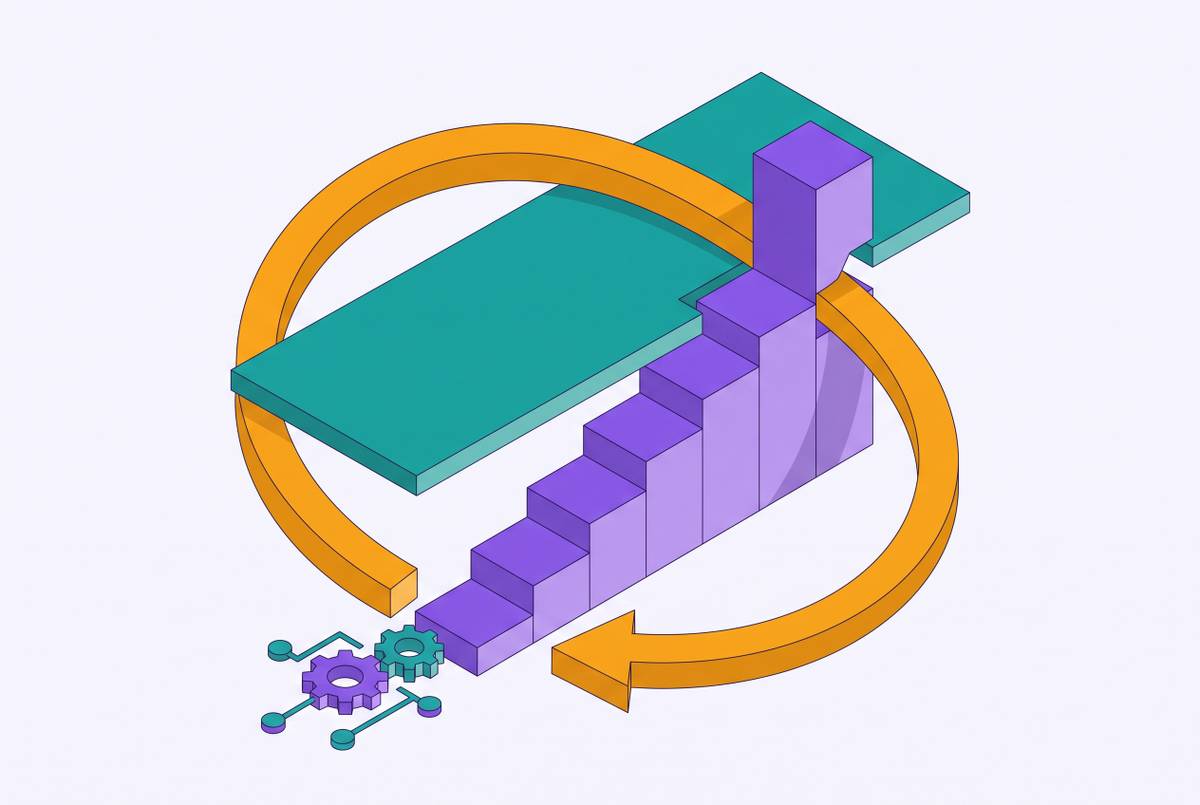
Volume without diagnosis repeats errors, while diagnosis without further attempts leaves the remedy untested. The commitment for the next returned FRQ is small but demanding. Do not stop at marking an answer wrong, and do not let “careless” end the investigation. Name the error type, choose its remedy, and use the next response to find out whether the thinking changed.